Basic Information
| Field | Details |
|---|---|
| Name | Zila Netanyahu |
| Name variants | Often recorded as Tzila, Tzviya, or Cela Segal Netanyahu |
| Birth | 28 August 1912, Petah Tikva |
| Death | 31 January 2000, Jerusalem |
| Spouse | Benzion Netanyahu, married 1944 (1910 to 2012) |
| Children | Yonatan (born 1946, died 1976), Benjamin (born 21 October 1949), Iddo (born 1952) |
| Education | Legal studies at Gray’s Inn, London |
| Occupation | Family matriarch, supporter of academic and public careers |
| Notable roles | Mother of an Israeli prime minister and of a national military figure |
Early life and education
Zila Netanyahu was born into a world that was still developing in the early twentieth century. Given that she was born in 1912, her early years were framed by the expanding Yishuv and changing borders of that era, when families served as both the foundation and the driving force behind national life. Although she did not pursue a career in public law, she did pursue legal education at Gray’s Inn in London, which shows intellectual aspirations and exposure to a wider world. Like a copper tool that is filed once and preserved for eternity, the discipline and accuracy imprinted by law school instruction are permanent.
Marriage and household: a partnership anchored in ideas
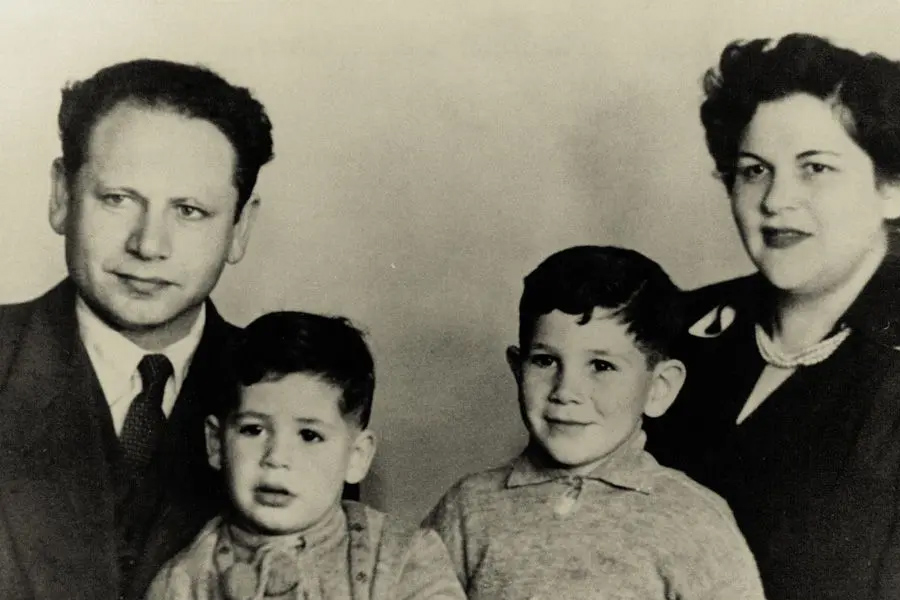
In 1944 Zila married Benzion Netanyahu, a historian and scholar whose life was threaded between academic study and political commitment. Their marriage became a household of ideas and intense parental investment. Zila’s role within the home was at once traditional and pivotal: she raised three sons, managed the family sphere, and supported her husband’s travels and career across continents. She functioned as the invisible scaffolding that allowed public wings to grow. Quiet work, immense consequence.
The children and their public paths
| Child | Birth year | Key public role | Notable dates |
|---|---|---|---|
| Yonatan Netanyahu | 1946 | Commander, Sayeret Matkal | Killed in Operation Entebbe, 1976 |
| Benjamin Netanyahu | 1949 | Politician, long-serving prime minister | Born 21 October 1949; political career spans late 20th and early 21st century |
| Iddo Netanyahu | 1952 | Physician, author, playwright | Career in medicine and letters |
Two of Zila’s three sons reached national prominence in very different arenas. Yonatan emerged as a military symbol, a special forces commander whose death in 1976 during an audacious rescue operation became a defining national story. Benjamin took a different route, into politics and statecraft, eventually serving as prime minister and embodying a public life that invited intense scrutiny and debate. Iddo cultivated a quieter public presence through medicine and literature, alternating clinical precision with creative expression.
The household influence: how a mother shaped public lives
Zila’s imprint on her children is the kind of influence that rarely appears in headlines but appears in decisions, temper, and resolve. She provided a domestic architecture in which courage, argument, and learning were routine. The family home acted as a workshop where stories of history and identity were soldered into daily life. Zila combined legal training with the patience of raising three demanding children; the result was a blend of intellect and stamina that the family carried into their careers.
Family snapshot: extended relations and descendants
| Relation | Name | Notes |
|---|---|---|
| Spouse | Benzion Netanyahu | Historian, academic, public intellectual |
| Children | Yonatan, Benjamin, Iddo | Diverse public roles: military, political, medical and literary |
| Grandchildren | Includes Yair Netanyahu, Avner Netanyahu, Noa Netanyahu-Roth | Members of succeeding generations with public presence |
The next generations continued to move in public spheres, with grandchildren appearing in media and politics. The family tree is compact and layered, the way a stack of plates holds the history of many meals.
Public profile and finances
Zila did not create a publicly accessible professional portfolio. She is best defined in public records as a homemaker and family pillar because her professional legal studies did not result in a lengthy legal practice. Financial details are kept confidential; neither her personal assets nor her corporate holdings are disclosed in public remarks. Rather than leaving separate institutional or financial imprints, her existence has always been documented through her relationships and her children’s public lives.
Extended timeline
| Year | Event |
|---|---|
| 1912 | Birth in Petah Tikva |
| 1944 | Marriage to Benzion Netanyahu |
| 1946 | Birth of eldest son, Yonatan |
| 1949 | Birth of son Benjamin, on 21 October |
| 1952 | Birth of son Iddo |
| 1976 | Death of Yonatan during Operation Entebbe |
| 2000 | Death in Jerusalem, 31 January |
Dates are the bones on which a human life hangs; in Zila’s case they mark a life lived largely in the background of larger public dramas. The timeline reads like a ledger of family events, a ledger that maps private grief and public commemoration.
Memory, legacy, and symbolism
Zila Netanyahu is a figure more symbolic than celebrated. She stands as the maternal root of a family that would command headlines for decades. Memory treats her as the steady source from which both grief and pride emanated. She is an archetype: the mother whose name may not dominate public conversation but whose fingerprints are visible in the actions and identities of her children. Her life suggests that influence can be diffuse, subtle, and lasting.
FAQ
Who was Zila Netanyahu?
Zila Netanyahu was the mother and matriarch of a family that produced both a national military figure and a long-serving political leader, born in 1912 and deceased in 2000.
When was she born and when did she die?
She was born on 28 August 1912 and died on 31 January 2000.
Who was her husband?
Her husband was Benzion Netanyahu, a historian and academic who lived from 1910 to 2012 and married Zila in 1944.
Who were her children?
Her children were Yonatan, Benjamin, and Iddo Netanyahu, born in 1946, 1949, and 1952 respectively.
Did she have a professional career?
She studied law at Gray’s Inn but did not pursue a public legal career and is primarily known as a family matriarch.
What is she best known for?
She is best known as the mother of Yonatan Netanyahu and Benjamin Netanyahu and as the stabilizing domestic presence behind their public lives.
Are there public records of her finances?
There are no widely available public records detailing her personal finances or assets.
How is she remembered today?
She is remembered as a quiet but pivotal presence in a family whose members became central to national history and public debate.