| Basic information | Details |
|---|---|
| Full name | Teresa Mary O’Shea |
| Known as | Tessie O Shea |
| Born | 13 March 1913 |
| Birthplace | Cardiff, Wales |
| Parents | James Peter O’Shea and Nellie Theresa Carr |
| Occupation | Singer, actress, entertainer |
| Best known for | Music hall performance, Broadway success, television appearances, novelty singing |
| Signature nickname | Two Ton Tessie |
| Died | 21 April 1995 |
| Place of death | Florida, United States |
A performer who seemed to arrive with a drumroll
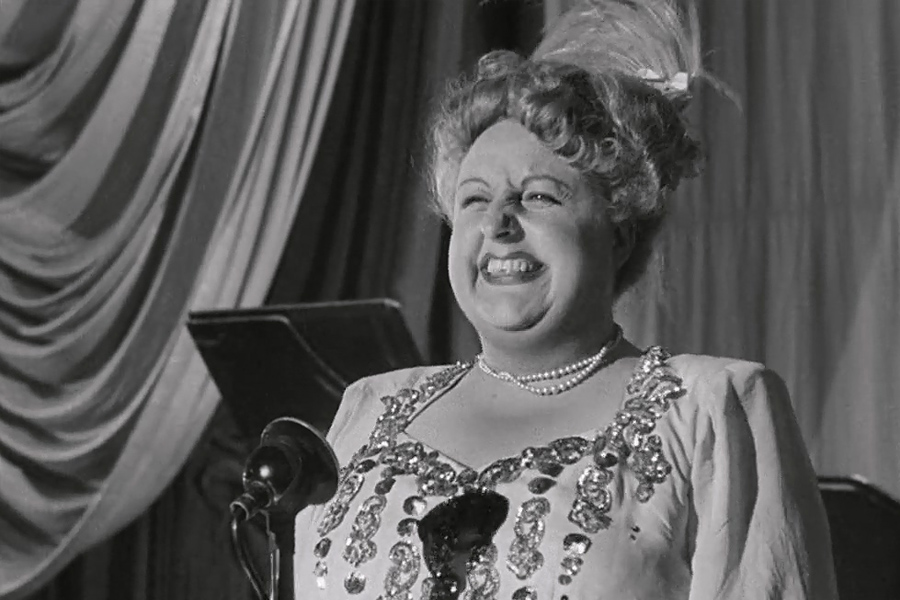
I think Tessie O Shea was built for the spotlight from the start. Her name carries the weight of a stage curtain rising, and her life had the same kind of force. She was born in Cardiff in 1913, into a family rooted in ordinary working life, yet she turned herself into something larger than life. Tessie became one of those rare entertainers who could make a room feel smaller and warmer, like everyone had been invited into the same bright fire.
She was not a faint, distant kind of star. She was loud in the best way, alive in the best way, and memorable in the way a brass band is memorable when it rounds a corner. From childhood onward, she moved toward performance as if it were the most natural thing in the world. By the time she was still very young, she was already appearing on stage and building the kind of confidence that cannot be taught in a classroom. It has to be worn in, like a favorite coat.
Family roots and the people closest to her
Tessie O’Shea was born to James Peter and Nellie Theresa Carr. Her tale begins with family, so their names important. As a newspaper distributor and former soldier, James Peter O’Shea’s background is clear. The world was not glamorous. A world of work, discipline, and movement. Despite her anonymity, her mother, Nellie Theresa Carr, was the silent focus of that early household.
No public family tree or list of siblings or children for Tessie O Shea. Absence is revealing. Spouses and heirs record some lives. Records, performances, theater lights, and applause document hers. Family specifics are scarcer than career information, making known facts more significant.
David Rollo is her purported spouse, however published accounts disagree on whether she married. That conflict makes me handle her personal life carefully. Undoubtedly, Tessie’s public persona never hinged on a domestic wrapper. She was first stage-bound. Her professional self was the room’s chandelier, but her personal details were hidden.
From Cardiff child to music hall force
I picture her early years as a small furnace slowly catching. Tessie began performing when she was still a child, and by the 1920s she was already being noticed. That kind of early start can flatten a person if the flame is not strong enough. In her case, it only sharpened her style. She became known as “The Wonder of Wales,” a title that sounds almost too grand until you remember she earned it.
Her act was rooted in music hall tradition, but she never felt trapped by it. She knew how to work a crowd. She knew timing, comic rhythm, and the value of a good song title. “Two Ton Tessie from Tennessee” became one of her signature pieces, and the nickname “Two Ton Tessie” followed her like a shadow with a grin. She turned weight, size, and humor into part of the performance rather than letting others use them against her. That takes nerve. It takes skill too.
By the 1930s and 1940s, she had become a major presence on the British entertainment circuit. She recorded novelty and comic songs, played major venues, and worked with the confidence of someone who understood the machinery of show business from the inside. Her career was not a straight line. It was more like a fireworks display, with bursts of light across stage, screen, radio, and television.
Broadway, television, and a name that crossed oceans
Tessie O Shea did not stay in one lane. That is part of what makes her so interesting. In 1963, Noël Coward wrote a role for her in The Girl Who Came to Supper. The character, Ada Cockle, was made for her, which is about as clear a sign of artistic impact as one can get. She went to Broadway and turned that opportunity into a Tony Award. That is the kind of leap that changes a performer from beloved to legendary.
Television also embraced her. She appeared on major American variety programs and became familiar to audiences far from Cardiff. She crossed the Atlantic not as a guest who needed explaining, but as a force already fully formed. Her voice, comic presence, and cheerful theatrical confidence worked in any room. She did not need to be translated. She simply arrived.
Her screen work added more layers. Films such as The Blue Lamp, The Russians Are Coming, the Russians Are Coming, and Bedknobs and Broomsticks show a career that stretched across decades and mediums. She was not frozen in one era. She moved with the times while still sounding unmistakably like herself.
What made her stand out
I think Tessie O Shea stood out because she understood how to turn personality into performance without sanding down the edges. She was funny without being lightweight. She was theatrical without being fake. She had a directness that must have felt refreshing to audiences. When she entered a performance, I imagine the room did not so much quiet as gather itself around her.
Her achievements were not small. She earned a Tony Award, received an Emmy nomination, and remained visible across different forms of entertainment for many years. Those are markers of staying power. Plenty of entertainers flash brightly and disappear. Tessie kept going. She built a career with a long tail, and the tail still flickers in old recordings, archival clips, and remembered stories.
Personal life in the public memory
Tessie should be remembered for more than headlines. She was more than a voice or comedian. She was a daughter and possibly a wife, although the public record is unclear. Her life was shaped by family, touring, career reinvention, and popularity.
Her parents ground her in a normal family before celebrity. James Peter O’Shea and Nellie Theresa Carr reveal her childhood. From there, stages, studios, and award ceremonies are accessible. Because of her grounded upbringing, her show-business trajectory feels more human.
Why Tessie O Shea still matters
I see Tessie O Shea as a bridge figure. She linked the old music hall world to Broadway, television, and modern celebrity culture. She was part of a generation of performers who learned to fill a room without microphones doing all the work, then adapted when the room became a screen. That kind of adaptability is not glamorous in itself, but it creates glamour.
Her life also shows how performance can become identity. Tessie was not just someone who sang and acted. She became a personality people remembered. The nickname, the songs, the awards, the appearances, the family background, the transatlantic career, all of it fits together like sequins on a jacket that has survived decades of wear.
FAQ
Who was Tessie O Shea?
Tessie O Shea was a Welsh singer, actress, and entertainer born in Cardiff in 1913. She became known for music hall performances, Broadway success, television appearances, and her bold comic stage presence.
Who were Tessie O Shea’s parents?
Her parents were James Peter O’Shea and Nellie Theresa Carr. They were the family foundation behind her early life in Cardiff.
Was Tessie O Shea married?
Public accounts do not agree cleanly. Some mention David Rollo as a spouse, while others say she never married. I treat that part of her life as uncertain rather than settled.
What was Tessie O Shea best known for?
She was best known for her signature stage persona, the song “Two Ton Tessie from Tennessee,” her Broadway role in The Girl Who Came to Supper, and her successful career in music hall, film, and television.
Did Tessie O Shea win major awards?
Yes. She won a Tony Award for her Broadway performance and also received an Emmy nomination for television work.
Why is Tessie O Shea still remembered?
She is remembered because she had a rare combination of comic timing, vocal personality, and stage power. She crossed from British variety into international entertainment and left a lasting mark that still feels vivid.
Significance Of Transitioning From Gp To Cloud Migration For Long Term Business Growth
Who Should Consider Selling A House In Utah Fast For Cash
A Practical 2026 Guide To Maintaining Legacy Heavy Duty Diesel Engines
Benefits Of Approaching A San Antonio Toyota Dealer
The Role Of Smart Sensors In Maintaining Vape Free Educational Spaces