Basic Information
| Field | Details |
|---|---|
| Name | Marian Hubbard Bell |
| Born | Circa 1880 |
| Died | 24 September 1962 |
| Parents | Alexander Graham Bell and Mabel Gardiner Hubbard |
| Spouse | David Grandison Fairchild, married 1905 |
| Children | Alexander Graham Bell Fairchild, Barbara Lathrop Fairchild, Nancy Bell Fairchild |
| Notable work | Coauthor of Book of Monsters, contributor to David Fairchild projects |
| Primary residence | The Kampong, Coconut Grove, Florida |
| Known for | Photography, garden creation, collaboration in plant exploration |
Early life and family background
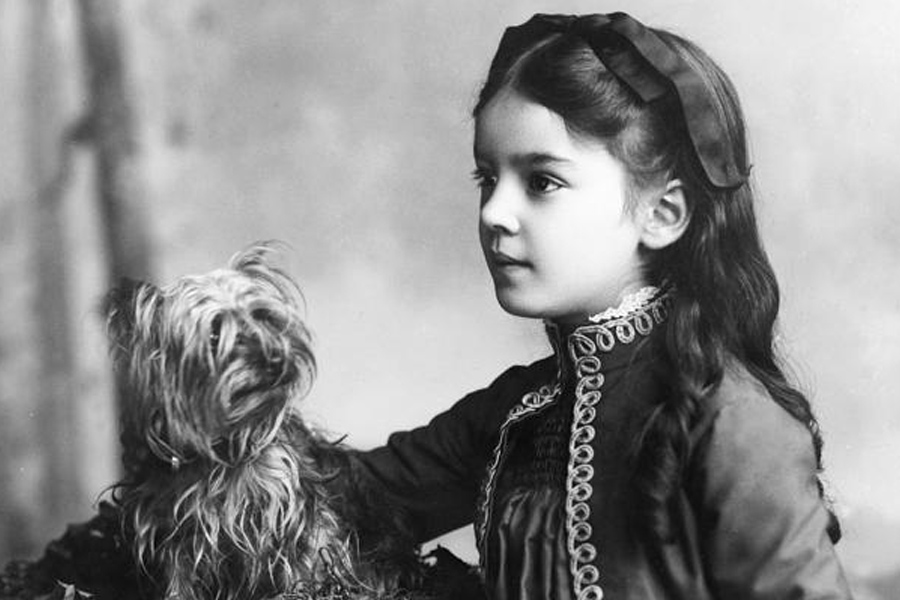
Marian Hubbard Bell arrived into a household where sound and invention were as constant as the tick of a clock. Born around 1880 to Alexander Graham Bell and Mabel Gardiner Hubbard, she was raised at the intersection of science, money, and public life. Her father carried the name that bent the world of communication; her mother carried the banking and social ties that opened doors. Marian grew up in the echo of experiments and in rooms where visitors included engineers, patrons, and explorers. Family structure shaped her: an elder sister, Elsie, prominent relatives in law and commerce, and the weight of a multi generational household that prized accomplishment.
The Bell family tree reads like a map of influence. Maternal grandparents were civic leaders and financiers; paternal grandparents taught speech and elocution. Those roots fed Marian’s life. She learned, without formal proclamation, how to move among collectors, scientists, and patrons. She learned also to keep the steady grunt of domestic and social labor behind the scenes so that others could stand center stage.
Marriage and partnership with David Fairchild
In 1905 Marian married David Grandison Fairchild, a man whose passport pages were filled with plant names. Their union was not merely domestic. It was a partnership of travel, cataloging, and planting. They married in year 1905 and soon had three children: a son born in 1906 and two daughters born in 1909 and 1912. The marriage stitched the Bell family legacy to a new narrative, that of introducing exotic grains, fruits, and ornamentals to the United States.
David was the public face of plant exploration, but Marian was the supporting sun. She photographed specimens, tended experimental plantings, and helped convert field notes into images and essays. In many ways she functioned as publisher, photographer, editor, gardener, and social diplomat, all roles that allowed David to travel farther and return with living cargo.
Children and the next generation
The Fairchild children carried three names that trace a lineage at once scientific and genteel. The eldest, Alexander Graham Bell Fairchild, born 1906, followed a scientific path in entomology and tropical health. Barbara Lathrop Fairchild, born 1909, and Nancy Bell Fairchild, born 1912, grew up in a household that valued specimen jars and seed packets alongside piano lessons and invitations from learned societies. The children experienced childhood in a house that doubled as a micro botanical garden, where plants were both ornament and evidence of a career.
Family life had rituals and numbers. Three children, two household estates, decades of correspondence, and a stream of visitors from botanical institutions. Those facts translate into a family archive that documents births, marriages, club memberships, and the ordinary minutiae that makes a biography human.
Career, creative works, and public contributions
Marian has a small but significant public presence. She co-wrote the 1914 book Book of Monsters, which features close-up photographs of insects and other small animals with a tone that combines scientific interest with curiosity. The reader is encouraged to look at the commonplace and uncover an alien scene by the huge, close-up, and occasionally eerie photographs.
Her achievements extended beyond only one book. Marian and her husband worked together to create gardens, arrange specimens, and get photos ready for publishing. She helped with the editorial development of travel narratives and the conversion of botanical discoveries into stories that the general public could understand. She handled parts in that era that were frequently not apparent on title pages but were apparent in the work’s texture.
Marian’s personal net worth has not been reliably assessed in the modern era. Her marriage to a governmental worker and her family’s money provided her with a buffer in life. Here, the record of labor—travel planning, photography, and landscape design—is more interesting than the financial details.
The Kampong and a living legacy
The Kampong, in Coconut Grove, Florida, became Marian’s stage and laboratory. Around the 1910s the Fairchilds developed the property into a winter home and living collection. The Kampong evolved into a microcosm for plant introductions and into a place where exotic species could be trialed in a subtropical climate.
Plant names and dates accumulate like stamps in a passport. By the 1920s and 1930s the garden roster included palms, fruit trees, and ornamentals that were rare in the continental United States. Marian tended beds, directed plantings, and curated vistas; the garden was her canvas and the plants were her pigments.
The Book of Monsters and photographic legacy
The 1914 book Book of Monsters provides a glimpse into Marian’s perspective. The pictures are more than just records. They are portraits. Small objects become landscapes thanks to macrophotography. From the perspective of an ant, a single spider or beetle transforms into a mountain range. In a time when photography necessitated patience, meticulous lighting, and chemical development, the piece exhibits both technical mastery and aesthetic sensibility.
Marian’s use of visuals connected art with science. Her images were used for educational purposes as well as curiosity. They instilled in readers a sense of awe for scale, texture, and form.
Later years and final days
After decades of plant exploration, publishing, and garden curation, Marian became a widow in 1954 when David Fairchild died. She lived until 24 September 1962. Her later years were quieter, oriented around family memory and the care of the garden she had helped shape. The Kampong continued to stand as a living testament to the couple’s work and to the hands that tended it.
Extended timeline
| Year | Event |
|---|---|
| Circa 1880 | Birth of Marian Hubbard Bell |
| 1905 | Marriage to David Grandison Fairchild |
| 1906 | Birth of son Alexander Graham Bell Fairchild |
| 1909 | Birth of daughter Barbara Lathrop Fairchild |
| 1912 | Birth of daughter Nancy Bell Fairchild |
| 1914 | Publication of Book of Monsters |
| 1916 | Development of The Kampong begins in earnest |
| 1954 | Death of David Grandison Fairchild |
| 24 Sep 1962 | Death of Marian Hubbard Bell |
FAQ
Who were Marian Hubbard Bell parents?
Marian was the daughter of inventor Alexander Graham Bell and Mabel Gardiner Hubbard, placing her within a family of scientific and financial prominence.
Who did Marian marry and when?
She married plant explorer David Grandison Fairchild in 1905, forming a partnership that combined travel, botany, and garden making.
How many children did Marian have?
Marian had three children: a son born in 1906 and two daughters born in 1909 and 1912.
What is Book of Monsters?
Book of Monsters is a 1914 publication coauthored by David and Marian Fairchild featuring large scale photographs of insects and small creatures.
What is The Kampong?
The Kampong is the Fairchild winter home and botanical garden in Coconut Grove, Florida, developed as a living laboratory for exotic plants.
Did Marian have a professional career?
She worked as a photographer, collaborator, and garden curator, contributing to publications and to the creation of living plant collections.
Are there scandals or gossip about her?
There are no prominent scandals tied to Marian in the public record; her life is documented mainly through family, garden, and publication records.
When did Marian die?
Marian Hubbard Bell died on 24 September 1962.
Turning Condo Neighbors Into Community Champions
Turning Your Yard Into A Place Wildlife Would Rather Avoid
When Your Pet Turns Dinner Into A Detective Mystery